
Memorabilia
The Sports Memorabilia Industry: How It Works and What Drives Value
This guide contains affiliate links. If you buy through them we may earn a commission, at no extra cost to you.
Sports memorabilia used to mean a signed ball in a shoebox. Today it is a global industry with auction houses, grading labs, league run authentication programs and items that sell for more than fine art. This guide explains how it works, in plain terms, so you can buy with confidence.
How big is the industry?
There is no single official number, because much of the market is private sales and auctions. Research firm Market Decipher estimated the global sports memorabilia and trading card market at $33.6 billion in 2024 and forecast $271.2 billion by 2034. Treat any forecast like this as one firm's projection, not a fact. What is not in dispute is the direction: record prices keep being broken, and more fans are collecting than ever.
The main types of memorabilia
- Autographed items. Signed balls, jerseys, helmets, photos, bats and pucks. This is the largest category by number of items.
- Game used and game worn items. Equipment and uniforms that were used in a real game. See our guide to game used items.
- Trading cards. From common base cards to rare rookie cards. See trading cards for beginners.
- Photos, wall art and documents. Signed photographs, tickets, programs and contracts.
- Collectibles. Bobbleheads, figures, coins, plaques and limited edition pieces.
Signed baseballs
See more-
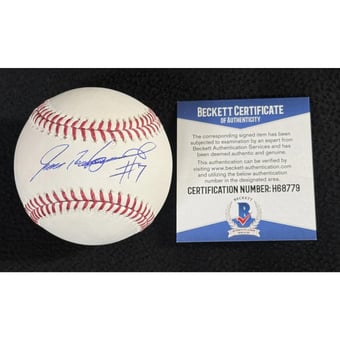 Ivan Pudge Rodriguez Signed Detroit Tigers OML Baseball Beckett COA
$127.99
$141.99Save $14.00Sold by Steiner Sports
Shop now -
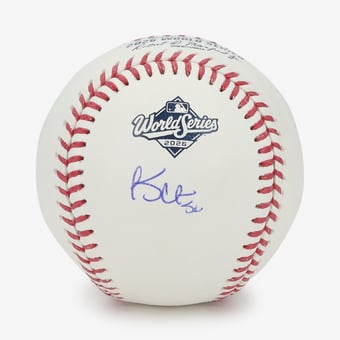 Kyle Harrison Milwaukee Brewers Autographed 2026 World Series Logo Baseball
$109.99
Sold by SportsMemorabilia.com
Shop now -
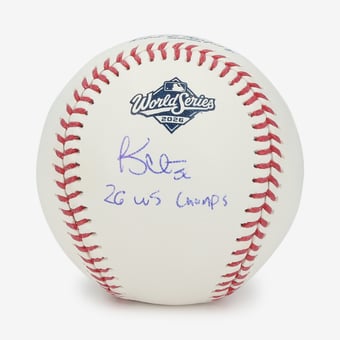 Kyle Harrison Milwaukee Brewers Autographed 2026 World Series Logo Baseball with "26 WS Champs" Inscription
$149.99
Sold by SportsMemorabilia.com
Shop now -
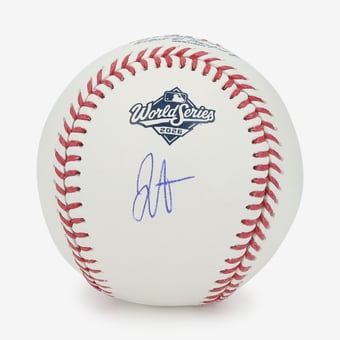 Joey Ortiz Milwaukee Brewers Autographed 2026 World Series Logo Baseball
$79.99
Sold by SportsMemorabilia.com
Shop now
Where signed items come from
Most authenticated autographs come from organized signings. A company pays an athlete to sign a set number of items in one session, and a representative of the authenticator watches every signature. Each item then gets a numbered hologram or certificate. Other items are signed in person at games or shows and are reviewed afterward by an authentication company that compares the signature to known examples.
Our guide to telling whether an autograph is authentic explains the names to look for.
What makes an item valuable
- The athlete. All time greats and current superstars hold value best. Names such as Michael Jordan, Babe Ruth, Tom Brady and Derek Jeter anchor the market.
- The moment. An item tied to a championship, a record or a debut is worth far more than an ordinary one.
- Scarcity. A player who rarely signs, or who has died, has a limited supply.
- Condition. Clean signatures, no fading, no damage.
- Proof. Strong authentication, and for game used items, a photo match to a specific game.
The top of the market
Bleacher Report's October 2026 ranking of the most expensive jersey sales shows how high the ceiling is:
- Babe Ruth's 1932 World Series "called shot" jersey: $24.12 million (August 2024)
- Michael Jordan's 1998 NBA Finals Game 3 jersey: $12.26 million (September 2026)
- Michael Jordan's 1998 NBA Finals Game 1 jersey: $10.09 million (September 2022)
- Diego Maradona's 1986 World Cup "Hand of God" shirt: $9.28 million (May 2022)
- Kobe Bryant's 1996 to 1997 debut season jersey: $7 million (April 2025)
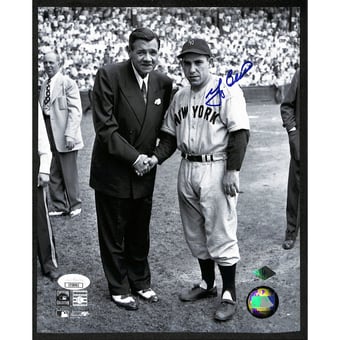
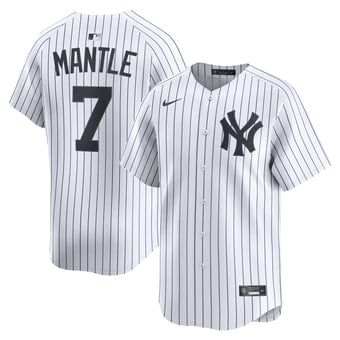
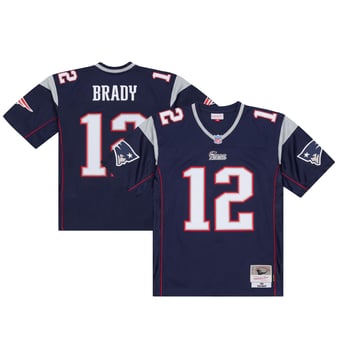
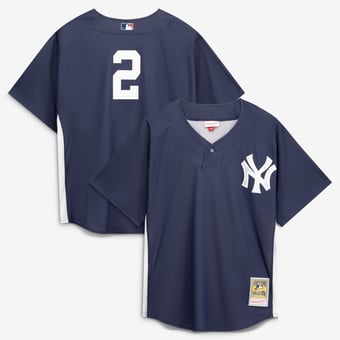
Shop memorabilia for the legends
Is memorabilia a good investment?
Some items have risen sharply in value. Many have not. Prices depend on taste, the athlete's reputation and the wider economy, and items can be hard to sell quickly. We are a shopping guide, not financial advisers. The safest approach is to buy what you would be happy to own and display even if its price never moves.
Where to start
As of November 23, 2026, AthletesMerch.com lists more than 614,000 memorabilia items sold by SportsMemorabilia.com and Steiner Sports. The simplest way in is to pick your favorite player and browse. You can also start by league:
Signed NFL helmets
See more-
 Arvell Reese New York Giants Autographed Riddell 2026 NFL Draft Speed Replica Helmet
$349.99
Sold by SportsMemorabilia.com
Shop now -
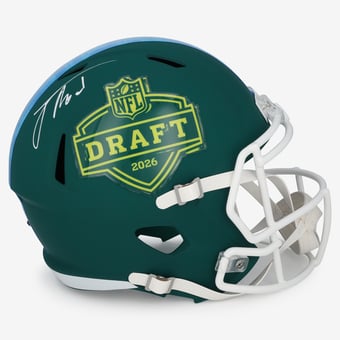 Jacob Rodriguez Miami Dolphins Autographed Riddell 2026 NFL Draft Speed Replica Helmet
$329.99
Sold by SportsMemorabilia.com
Shop now -
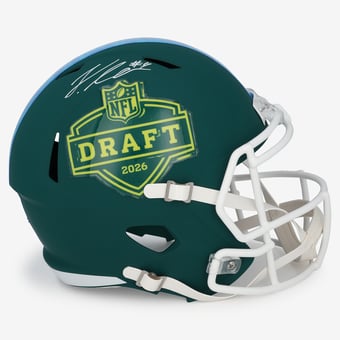 Jeremiyah Love Arizona Cardinals Autographed Riddell 2026 NFL Draft Speed Replica Helmet
$449.99
Sold by SportsMemorabilia.com
Shop now -
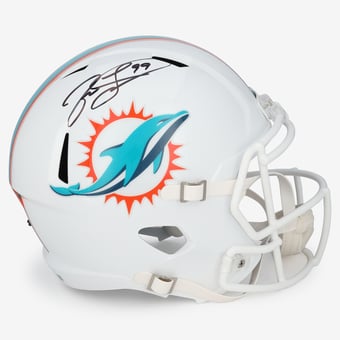 Jason Taylor Miami Dolphins Autographed Riddell Speed Replica Helmet
$349.99
Sold by SportsMemorabilia.com
Shop now
If you film or collect yourself, WatchSports.com lets you start a free channel and share sports video, including collection tours and shows.
Common questions
How big is the sports memorabilia market?
There is no official figure. Research firm Market Decipher estimated the global sports memorabilia and trading card market at $33.6 billion in 2024. Other firms publish different numbers because they define the market differently.
What is the most expensive piece of sports memorabilia ever sold?
The jersey Babe Ruth wore in the 1932 World Series when he "called his shot" sold for $24.12 million in August 2024, the highest price on record for a sports collectible.
What is the best first piece of memorabilia to buy?
A signed photo or ball of a player you love, with authentication from a recognized company. These are widely available, easy to display and easy to verify.